
Agent-ready ecommerce for Magento and Shopify stores.

A catalogue that AI shopping agents can read, compare and buy from, built on work that helps ordinary search today.

Agent readiness is the technical work that lets AI shopping agents find your products, read the right price and stock, and complete a purchase: structured data, feeds that agree with the site, machine-readable policies and a clean checkout. For Magento, Adobe Commerce, Hyvä and Shopify merchants. Estimated in writing once we have read your pages and feeds.

For
Magento and Shopify merchants who want to be readable where buying is moving
What it is
Structured data, feeds, availability, policies and checkout, fixed at source
Price
A written estimate once we have read your pages and feeds
First step
A free first look at your product pages and feed

Can an agent read your store?

What we usually find on a first look.

  • Our feed says one price and the product page says another.

    What it usually means

    Agents read both. A mismatch looks like a trap, and the offer is skipped or distrusted.

  • We do not know whether our product pages have structured data at all.

    What it usually means

    Many themes emit some, incomplete or invalid. Identifiers, availability and shipping are the usual gaps.

  • Our returns policy is a PDF in the footer.

    What it usually means

    Agents compare offers on delivery and returns. A policy that is only prose cannot be compared.

What an agent needs from a store, and what we do about it.

Six pieces of plumbing. Most of them help ordinary search today.

  • Structured data, complete and true

    Product and Offer with identifiers, price, availability, shipping and returns, validated.

  • Feeds that agree with the site

    Merchant Center and other feeds generated from the same data as the page.

  • Current availability and price

    Caching, indexing and feed schedules checked so what an agent reads is what a buyer pays.

  • Policies as data

    Shipping, returns, warranty and contact details in structured data, on findable pages.

  • A checkout an agent can finish

    Clean guest checkout, and edge rules that tell agents from attacks.

  • What it is not

    Not a promise of orders from agents, and not a plug-in.

The same store, with and without us.

Without us
  • Structured data missing, invalid or incomplete
  • A feed that disagrees with the page
  • Sold-out products marked in stock
  • Policies only in prose or a PDF
  • Bot rules that block everything, buyers included
  • Nobody reading the diagnostics
With Refined Commerce
  • Product and Offer data validated page by page
  • Feeds generated from the same data as the page
  • Availability and price checked for freshness
  • Shipping and returns marked up as data
  • Edge rules tuned to tell agents from attacks
  • Search Console and Merchant Center read monthly

How we do the work.

Read what the store exposes, fix the data at source, mark it up, then monitor the reports.

  1. Step 1: A free first look

    Send us the store address. A senior person puts a few product pages and your feed through the validators and reads them as an agent would.

    Within two working days
    Access we need
    None. Publicly served pages and feeds only.
    What you receive
    A written note of what is missing, wrong or inconsistent, and an estimate.
  2. Step 2: Fix the data at source

    Missing identifiers, attributes, shipping and returns data added in Magento or Shopify, not patched into a template.

    First weeks, depending on the catalogue
    Access we need
    Admin access, and a product export.
    What you receive
    A list of what was added and where.
  3. Step 3: Mark up, feed and validate on staging

    Structured data templates and feed generation built on a staging copy, validated against the top products, then checked against the feed.

    Second stage
    Access we need
    A staging copy of the store.
    What you receive
    Validation results for the top products.
  4. Step 4: Deploy and monitor the reports

    Deployed at a time agreed with you, then Search Console and Merchant Center diagnostics read each month.

    At go-live, then monthly
    Access we need
    Read access to Search Console and Merchant Center.
    What you receive
    A monthly note if a theme or extension change breaks the markup.

Can an AI agent buy from our store today?

The questions we ask of a store before we estimate the work. Most stores pass some and fail others; very few fail all of them.

  • Does every product page carry Product and Offer structured data that validates?

    Name, images, brand, identifiers, price, currency, availability.

  • Do the feed and the page say the same price and stock?

    Agents read both. A mismatch looks like a trap.

  • Are shipping, returns and warranty readable as data, not only as prose?

    Shipping and return policy markup, and pages an agent can find.

  • Can a visitor check out as a guest, without a phone call or a chat window?

    Address, delivery and payment steps that validate cleanly and finish.

  • Does the edge tell a shopping agent from an attack?

    Bot rules tuned so that known agents are let through and scrapers and attackers are not.

  • Is someone reading the diagnostics?

    Search Console and Merchant Center reports read monthly, so a theme change does not silently break the markup.

Is this the right service for your store?

This is for you if

  • You use Magento, Adobe Commerce, Hyvä or Shopify with a real catalogue
  • You want structured data and feeds that are complete and agree
  • You want work that helps ordinary search now
  • You want honesty about what agents will and will not do

If your situation is different

We price the work, not the clock.

This service
Priced as a project: a written estimate once we have examined the store.
How you pay
Usually spread across the length of the project.
Our rate
£80 an hour plus VAT, the same for every merchant.
Never charged
Account management, or the first look at your store.

Estimated in writing, and most of it useful today.

Agent readiness is catalogue, template and feed engineering, estimated in writing once we have read what the store already exposes. Most of it, the structured data and the feeds, improves ordinary search and shopping listings now, whether or not agents ever buy from you, so the work is not a bet on one version of the future.

  • Estimated in writing after we have read the public pages and feeds
  • Fixed at source, so every surface reads the same data
  • Validated page by page before anything goes live
What happens first
  1. Ten of your top product pages are run through the structured data validators.
  2. The feed is compared with those pages for price and availability.
  3. You get a written list of the gaps, in priority order.
How our pricing works

The team behind this work.

A store built by this team, selling worldwide. The figures are the store's own, measured by Google.

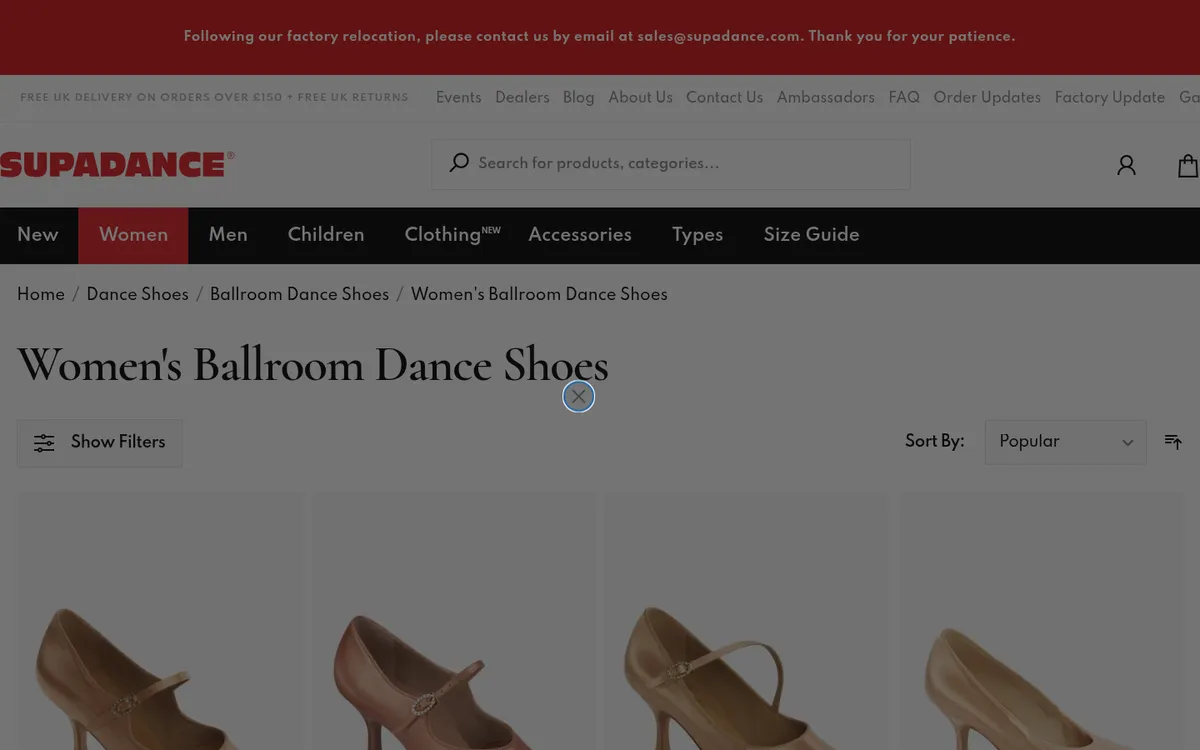
Supadance: a category page of the live store on desktop
Supadance on a phone
Dance shoes, handmade in EnglandMagento 2 and Hyvä

Supadance

Design and Hyvä build for a British dance-shoe maker selling worldwide, with ongoing development and support.

Passes Core Web Vitals on mobile
  • LCP1.3 s
  • INP112 ms
  • CLS0.01

Core Web Vitals, real-user data (Chrome UX Report), mobile, 28 days to 31st October 2026. Marks show Google's thresholds.

Why merchants bring this work to us.

About Refined Commerce
  • 100%

    Read by a person before it reaches your store

    Every line of code and every piece of content that AI tooling drafts is read, tested and signed off by a senior engineer.

  • 2008

    Judgement that the tooling does not have

    Years of Magento and Shopify work tell us what is safe to change on a trading store, and what needs a second look.

  • 1

    Point of contact, whoever does the work

    Whether we do it for you or your own team does it with AI, the same senior person stays answerable for the store.

Questions merchants ask about this.

Is agent shopping real yet, or is it hype?

Some of both. AI assistants already read product pages and feeds to answer shopping questions, and large AI, payment and platform companies are publishing protocols for agents to buy on a person's behalf. Nobody can tell you how many orders will arrive that way, and we will not pretend to. The work we propose is the part that pays now whatever happens.

Do we need a special API or plug-in for agents?

Not for most stores today. Agents start with what search engines already read: Schema.org Product and Offer data on the page and a product feed that agrees with it. Where a protocol matters for your store and has settled enough to build against, we will say so and estimate it as a separate piece of work.

Will agents bypass our brand and just compare prices?

Some will, which is why the data has to carry what makes you worth choosing: delivery time, returns, stock, warranty, identifiers and the attributes a buyer filters on. A store that exposes only a name and a price will be compared on price.

Does this apply to Shopify stores?

Yes, with less to build. Shopify emits a good deal of structured data and feed plumbing itself, and is adding agent features of its own; the work there is making sure your product data is complete and true, and that theme changes have not broken what Shopify emits.

Can you guarantee our products appear in an AI assistant's answers?

No. Nobody controls what an assistant chooses to show, any more than they control Google's rankings. We can make sure that when an agent reads your store it finds complete, consistent, current data, which is the part a merchant can control.

How is this different from SEO?

It overlaps. Structured data, feeds and clean attributes are also what search engines and shopping listings use, so most of this work improves ordinary search visibility today. The agent-specific parts are availability and policy data in machine-readable form and a checkout that works without a human improvising.

See what your store already shows the world, free.

Give us the address and we will read what the store already shows the world: release, support status, PHP, headers, hosting and any sign of a hijack. One page, by email, within two working days. Nothing is accessed or tested.

  • Magento Open Source, Adobe Commerce and Mage-OS stores
  • No login, no access, no obligation
  • Written by a person, not a scanner
Free store health checkOne page, by email

5.0 from 23 Google reviews

Free, with no obligation. We read only what your store serves publicly; nothing is accessed or tested, and it is not a security guarantee. Privacy notice.
What you receive
Example report
Magento Security and Upgrade Health Check
example-store.co.ukNeeds attention
Platform
Magento Open Source 2.4.4-p3
Adobe support
ended 12th April 2025
PHP
8.1, end of life 31st Dec 2025
Frontend
Luma
Security headers
2 of 6 present
Hijack indicators
none found

What we would do first. Apply the outstanding security fixes, then plan the upgrade to a supported release.

Free health check