
Fishing tackle, UK and worldwideMagento 2 and Hyvä
Total Fishing Tackle
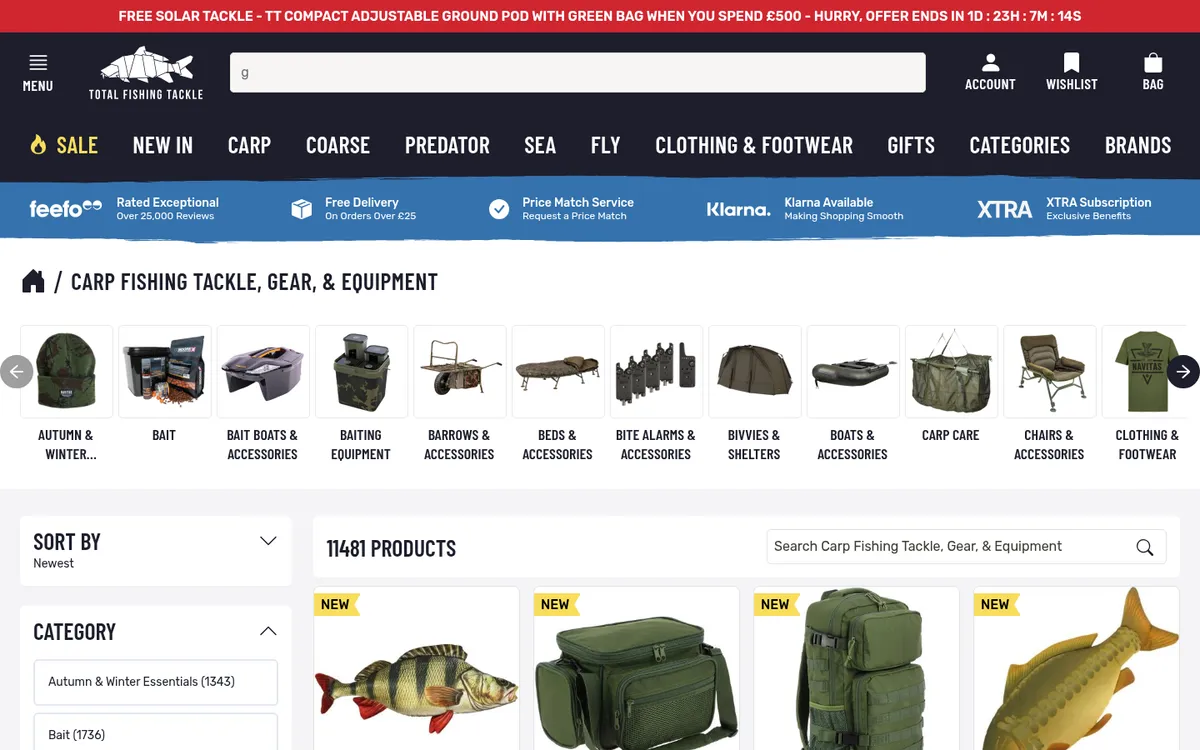
Hyvä frontend and integrations for a fishing tackle store with a deep catalogue: 11,482 products in the Carp category alone, read on 31st October 2026.
Descriptions, attributes, alt text and translations from your own data, each item read by a person before import.
Product descriptions, attributes, alt text, meta descriptions and translations generated from the data you already hold, checked by a person against that data, and loaded into Magento, Adobe Commerce, Hyvä or Shopify by import. For merchants with hundreds or thousands of thin product pages. Estimated in writing once we have read the catalogue.
What merchants say about their product pages.
Half our products still have the supplier's one-line description.
Thin pages give buyers and search engines little to go on. Your own data usually says more than the page does.
Our filters do not work because sizes are written five different ways.
Attributes need normalising before filters, search and feeds can use them. That is often the bigger win.
We tried an AI plug-in and it invented features our products do not have.
It was writing from a template, not from your data, and nobody read the output. Both have to change.
Six things about every batch, the last of them a limit we keep on purpose.
Attributes, supplier sheets, specifications and images. No invented claims or measurements.
Each piece checked against the source data before import. Unsupported claims are cut.
Missing values filled and normalised so filters, search and feeds work.
Every image described and every page given a meta description.
From the reviewed English, reviewed again, with brand terms and units fixed in the brief.
Not a button that writes pages on demand. If a product has no data worth writing about, we say so.
Small first, then the whole catalogue in batches, each one read before it is loaded.
Send us the store address and an export of a few products. A senior person reads them and replies in writing.
Within two working daysAn export shows which products are thin and what sources exist. We agree tone, length, structure and what must never be said.
Within two working days of the exportA small set generated, read by a person and shown to you. The brief is revised until you are happy with the voice.
First weekEach batch generated, read against the source data, corrected and imported to staging for you to see on the page.
Per batchLoaded once you are happy with it, with the previous content kept so any item can be put back.
When you are happy with itThe model only ever sees what you already know about the product. The reviewer sees both.
We price the work, not the clock.
The brief, the generation set-up, a person's review of every item and the imports are all included in the estimate. The cost scales with the number of products and the review each needs, so we put an estimate in writing after reading the catalogue rather than quoting a per-product price we would have to guess.
A large catalogue built by this team. The figures are the store's own, measured by Google; they are not a claim about AI content.
Hyvä frontend and integrations for a fishing tackle store with a deep catalogue: 11,482 products in the Carp category alone, read on 31st October 2026.
Every line of code and every piece of content that AI tooling drafts is read, tested and signed off by a senior engineer.
Years of Magento and Shopify work tell us what is safe to change on a trading store, and what needs a second look.
Whether we do it for you or your own team does it with AI, the same senior person stays answerable for the store.
Google's published guidance is that its systems reward original, high-quality content however it is produced, and act against content made to manipulate rankings. Content written from accurate product data, reviewed by a person and useful to a buyer is what that guidance asks for. We do not claim a ranking outcome either way.
Not if the brief is yours. The tone comes from your best existing pages, the structure is one you choose, and the facts come from your own data. The sample batch exists so you can say no to the voice before the catalogue is written in it.
We tell you. A product with a name, a price and one photograph gets a short, accurate description or none at all; nothing is invented to fill the gap. The catalogue read at the start lists these products so you can decide whether to find more data or leave them.
Yes, and for most stores the attributes matter more. Missing sizes, materials, colours, dimensions and compatibility values are filled from source data where it exists, normalised to one format and reviewed, so your filters, search and shopping feeds work properly.
Magento Open Source, Adobe Commerce and Mage-OS, including Hyvä stores, through Magento's import or its API; Shopify and Shopify Plus through CSV import or the Admin API. The content is the same either way; only the loading differs.
Yes. It is loaded into your store, and you are given the import files too, so it is yours to keep, edit or move to another platform.
Give us the address and we will read what the store already shows the world: release, support status, PHP, headers, hosting and any sign of a hijack. One page, by email, within two working days. Nothing is accessed or tested.
What we would do first. Apply the outstanding security fixes, then plan the upgrade to a supported release.