Magento to Shopify migration.

Catalogue, customers, orders and integrations moved to Shopify or Shopify Plus, with the search rankings planned for.

We move Magento Open Source and Adobe Commerce stores to Shopify or Shopify Plus: catalogue, customers, order history, redirects and integrations, with a 301 map and a planned URL structure. For merchants who have decided Magento is more platform than they need. You get a written plan and estimate once we have examined the Magento store.

For
Magento merchants who want less platform to maintain
What it is
Catalogue, customers, orders, redirects, integrations and a new theme on Shopify
Price
A written estimate once we have examined the Magento store
First step
The free health check reads where the Magento store stands

Why merchants decide to leave Magento.

What we hear when someone asks us about Shopify.

  • We spend more on keeping Magento going than on improving it.

    What it usually means

    Upgrades, patches and hosting take the budget. Shopify maintains the platform for a monthly fee; your spend goes on the store.

  • Our release has lost support and the upgrade estimate is bigger than we expected.

    What it usually means

    That is the moment to compare the two routes properly. Sometimes the upgrade is right; sometimes the move is.

  • We are worried a migration will wipe out our Google traffic.

    What it usually means

    Traffic is lost through missed redirects and changed content. Both can be planned for, page type by page type.

What the migration includes.

Six parts, each in the written plan with a count you can check against the Magento admin.

  • Catalogue mapped, not dumped

    Configurables become variants, categories collections, attributes metafields, agreed before the first import.

  • Customers and order history

    Accounts, addresses, group tags, consent as recorded, and the orders behind them.

  • Redirects and rankings

    A 301 map for every indexed URL, a planned URL structure, metadata and structured data carried across.

  • Integrations re-connected

    Each integration given a route: the vendor's app, an equivalent, or a custom build.

  • A theme built for your brand

    Your design carried or redrawn on Shopify's current theme architecture, editable by your team.

  • A cutover with a way back

    Built behind a password while Magento trades; Magento kept read-only afterwards.

The same store, with and without us.

Without us
  • Rankings lost to URLs nobody mapped
  • Products imported as a flat list
  • Customers locked out with no warning email
  • Integrations switched off before their replacement works
  • A weekend with the shop closed
  • Counts that do not match, found by customers
With Refined Commerce
  • Every indexed URL mapped to a 301 before the build
  • Variants, collections and metafields agreed in advance
  • A password-reset email written with you
  • Each integration replaced and tested first
  • Cutover at a quiet hour, Magento kept read-only
  • Counts reconciled against Magento before you test

Proof, from real stores.

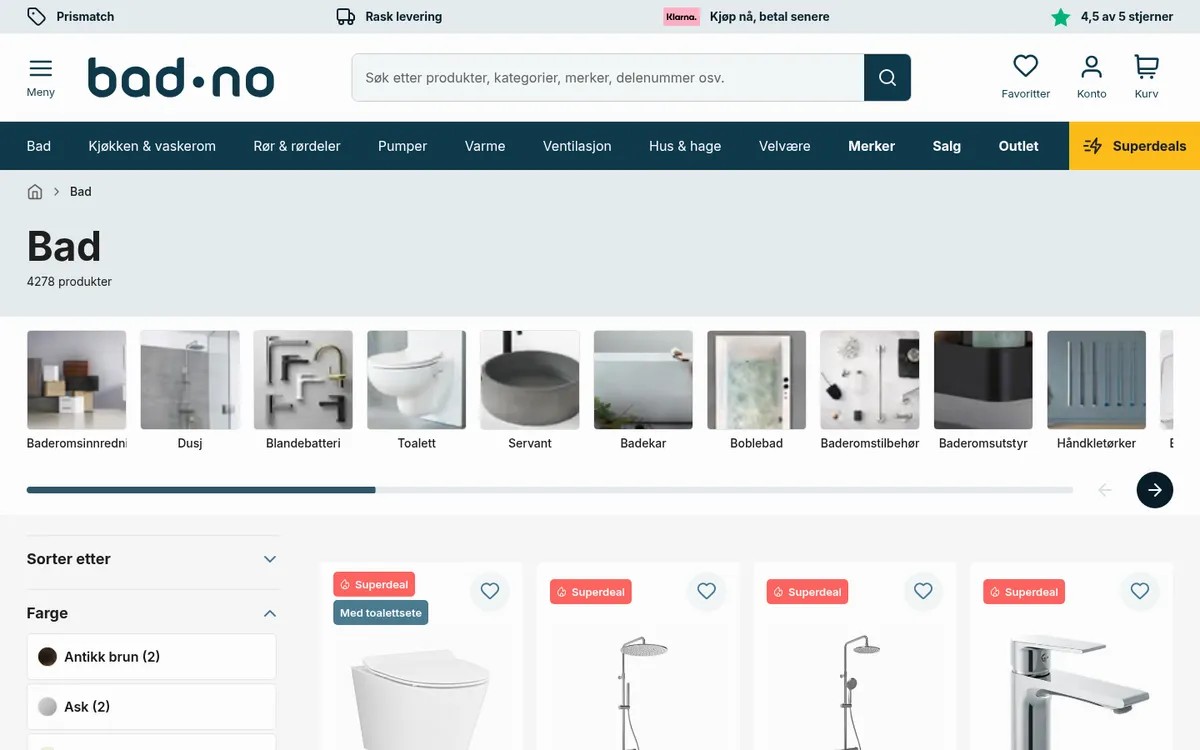
Bad.no: a category page of the live store on desktop
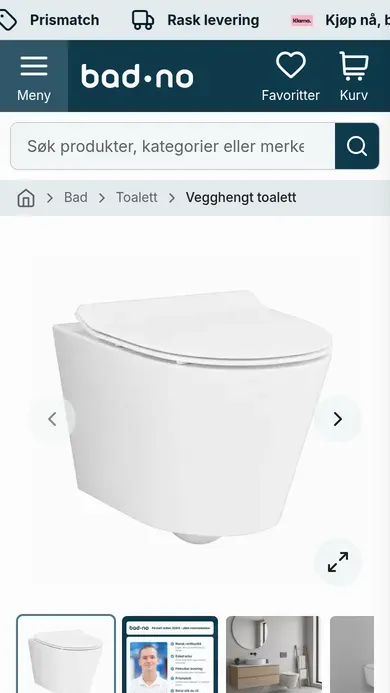
Bad.no on a phone
Bathroom and kitchen hardware, NorwayShopify Plus

Bad.no

Shopify rebuild and a new visual identity for a Norwegian bathroom and kitchen hardware retailer, with filtering, product comparison and image galleries.

Passes Core Web Vitals on mobile
  • LCP0.9 s
  • INP182 ms
  • CLS0

Core Web Vitals, real-user data (Chrome UX Report), mobile, 28 days to 31st October 2026. Marks show Google's thresholds.

Since 2021, we've had the pleasure of collaborating with Rowan and his team at Burgess Commerce, following our transition to Shopify Plus. …

Erlend StunnerBad.noGoogle review

How we carry out a migration.

The figures are reconciled at each step, and Magento keeps trading until the switch.

  1. Step 1: The free health check

    Send us the store address. A senior engineer reads its release, support status, PHP, headers, hosting and any sign of a hijack.

    Within two working days
    Access we need
    None. Publicly served pages only; nothing is tested.
    What you receive
    One page by email, with no obligation.
  2. Step 2: We read the Magento store and write the plan

    Catalogue shape, customer and order volumes, integrations, custom modules and every indexed URL.

    First findings within two working days
    Access we need
    Read access to the Magento admin, database export and Search Console.
    What you receive
    A written mapping, the list of what has no Shopify equivalent, and an estimate.
  3. Step 3: Build the store behind a password

    Theme, collections, navigation, pages, apps and integrations built on a development store while Magento keeps trading.

    Most of the project
    Access we need
    Collaborator access to your Shopify account.
    What you receive
    A preview store to review, and written progress updates.
  4. Step 4: Trial migration, then you test

    Products, customers and orders imported in full, counted against Magento, then tested by you; every redirect loaded and checked.

    Before the cutover
    What you receive
    A reconciliation of counts, and a redirect map tested against the live URL list.
  5. Step 5: Cutover at a quiet hour, then we monitor

    Final sync, domain switched, redirects live, Magento made read-only. Search Console, orders and integrations checked daily for the first weeks.

    A quiet hour agreed with you
    What you receive
    A cutover note, and daily checks on 404s and rankings.

How the rankings come with you.

Search traffic is lost in migrations through missed redirects, changed content and nobody watching afterwards. Each has a step in the plan.

  • Every URL mapped before the build

    The full list of indexed Magento URLs, from the sitemap, Search Console and crawl data, each given its new Shopify address as a 301 redirect. Not just products: categories, filters that rank, CMS pages, images.

  • The URL structure chosen deliberately

    Shopify has its own URL shapes for products and collections. We decide the structure, the collection hierarchy and the handles before anything is created, rather than fixing them with a second round of redirects later.

  • Content carried page type by page type

    Titles, meta descriptions, headings, product copy, category copy, alt text and structured data compared between the Magento page and its Shopify equivalent, so the page search engines find is the page they knew.

  • Watched after the cutover

    Sitemaps submitted on the day. Search Console, crawl errors and the redirect log read daily for the first weeks, and anything 404ing is mapped the same day.

We price the work, not the clock.

This service
Priced as a project: a written estimate once we have examined the store.
How you pay
Usually spread across the length of the project.
Our rate
£80 an hour plus VAT, the same for every merchant.
Never charged
Account management, or the first look at your store.

Priced as a project, decided by what has to move.

The shape of the catalogue, the integrations and custom modules, and the size of the URL map decide the work, so we examine the Magento store first and then give you a written plan and estimate. Shopify's plan fees and app subscriptions are paid to Shopify and the vendors. Work after the cutover can be ad hoc, itemised on a monthly invoice, or part of a retainer.

  • Every integration and custom module given a route before you commit
  • Counts reconciled against Magento before you test
  • Payment usually spread across the project
What happens first
  1. We count products, variants, customers, orders and indexed URLs from the Magento store.
  2. Each integration and custom module is listed with a first view of its Shopify route.
  3. You get a written note of anything that would make Shopify the wrong move.
How our pricing works

Is this the right service for your store?

This is for you if

  • You sell a catalogue of products to consumers and want less platform to maintain
  • Your Magento release has lost support, or the upgrade estimate has made you think
  • Your search traffic matters and has to come with you
  • You want one team that knows both platforms

If your situation is different

If staying on Magento is right for your store, we will say so. We do both.

Why merchants bring this work to us.

About Refined Commerce
  • 2

    Platforms, so you get an honest answer

    We build on Shopify and on Magento. When a merchant asks which is right for them, we have no reason to push either.

  • 2021

    On Shopify Plus since 2021

    A registered Shopify Partner, building themes, custom apps and integrations for stores selling in the UK and abroad.

  • 1

    Point of contact, and senior engineers only

    You deal directly with the founder. No juniors learning on your store and no account managers in between.

Questions merchants ask about this.

Will moving from Magento to Shopify hurt our search rankings?

Not if the move is planned for it. Shopify fixes the shape of its URLs, so most Magento URLs change. We map every indexed URL to a 301 redirect before the build, carry metadata and structured data across, and monitor Search Console after the cutover.

What moves, and what cannot?

Products, variants, images, categories as collections, attributes as metafields, customers, order history, content pages, discount rules and redirects all move. Customer passwords do not, because Shopify cannot import another platform's password hashes, so customers set a new one on first login. Magento customisations with no Shopify equivalent are listed in the plan.

Does the shop have to close for the cutover?

No. The Shopify store is built and loaded in full behind a password while Magento keeps trading. On cutover day we take a final sync of orders and customers, switch the domain, and the redirects take effect at the same moment. Magento is kept read-only for an agreed period so nothing is lost.

Shopify or Shopify Plus?

Shopify for most stores. Plus is Shopify's higher tier and earns its fee when you need to customise the checkout, sell B2B with company accounts and price lists, open separate stores for new markets, or trade at a volume where standard limits bind. We tell you which in writing; often it is Shopify now and Plus later.

Our store has complex B2B pricing and a big ERP integration. Should we still move?

Possibly not, and we would rather say so than migrate you into a platform that cannot do what your business depends on. Customer-group pricing, tiered catalogues, multi-store estates on one admin and deep ERP logic are where Magento is still stronger. If that is your store, we will show you the Hyvä route instead.

What happens to our integrations?

Each is listed in the plan with its route: the vendor's Shopify app, an equivalent app, or a custom integration we build. Nothing is switched off until its replacement is tested.

Talk to us about your store.

Get in touch and you get three things.

  1. 1
    A reply from a senior person

    Not a sales team, and nobody reading from a script.

  2. 2
    Findings, a plan and an estimate in writing

    Within two working days.

  3. 3
    No obligation

    What happens next, and when, is your decision.

Get in touch