Magento to Shopify migration: what you lose, what you gain and how it works
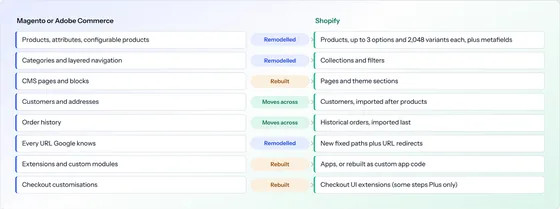
The honest trade: what Shopify takes off your plate, what it asks you to give up, how products, customers, orders and URLs move, and where migrations go wrong.
Some stores outgrow Magento, some find it is more platform than they need, and most need it to talk to the finance and stock system without anyone re-keying orders. These guides cover the move to Shopify, the Business Central connection and the choices in between, honestly and without a preferred answer.
The honest trade: what Shopify takes off your plate, what it asks you to give up, how products, customers, orders and URLs move, and where migrations go wrong.
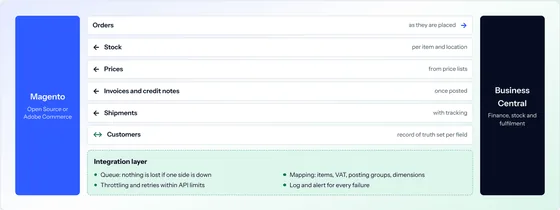
Connector, middleware or a built integration; which records move which way; and the API limits, webhook rules and mapping decisions that decide whether it holds up.
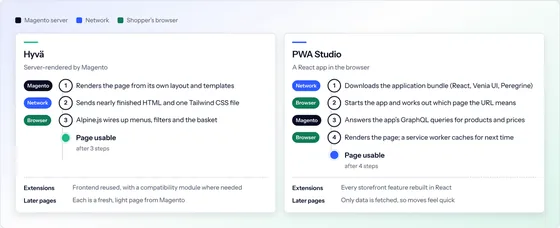
How each builds a page, which is faster for shoppers, what happens to your extensions, what each costs to run and what changed in 2025 and 2026.
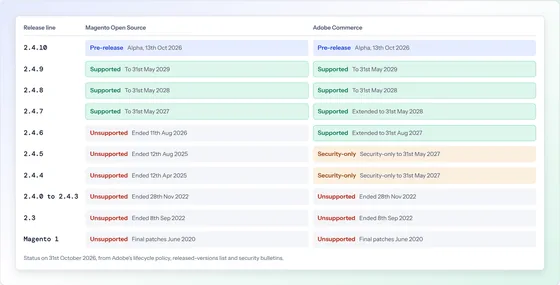
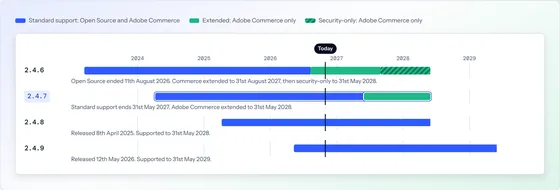
Which Magento Open Source release lines still receive fixes, how that differs from Adobe Commerce, what happened to Magento 1 and what running an unsupported version risks.
The dates for every 2.4 release line, what changes for Open Source and Adobe Commerce, the PHP clock underneath and the three ways forward.
Every article here describes work we do every week, for stores of every size. You get a written plan and estimate once we have examined the store.
Give us the address and we will read what the store already shows the world: release, support status, PHP, headers, hosting and any sign of a hijack. One page, by email, within two working days. Nothing is accessed or tested.
What we would do first. Apply the outstanding security fixes, then plan the upgrade to a supported release.